Sich Flektieren
If Paradise Is As Half As Nice
Köhlmuhle/Zeitz, Germany
Artist in Residence with IPIHAN #16
2026
Sich flektieren
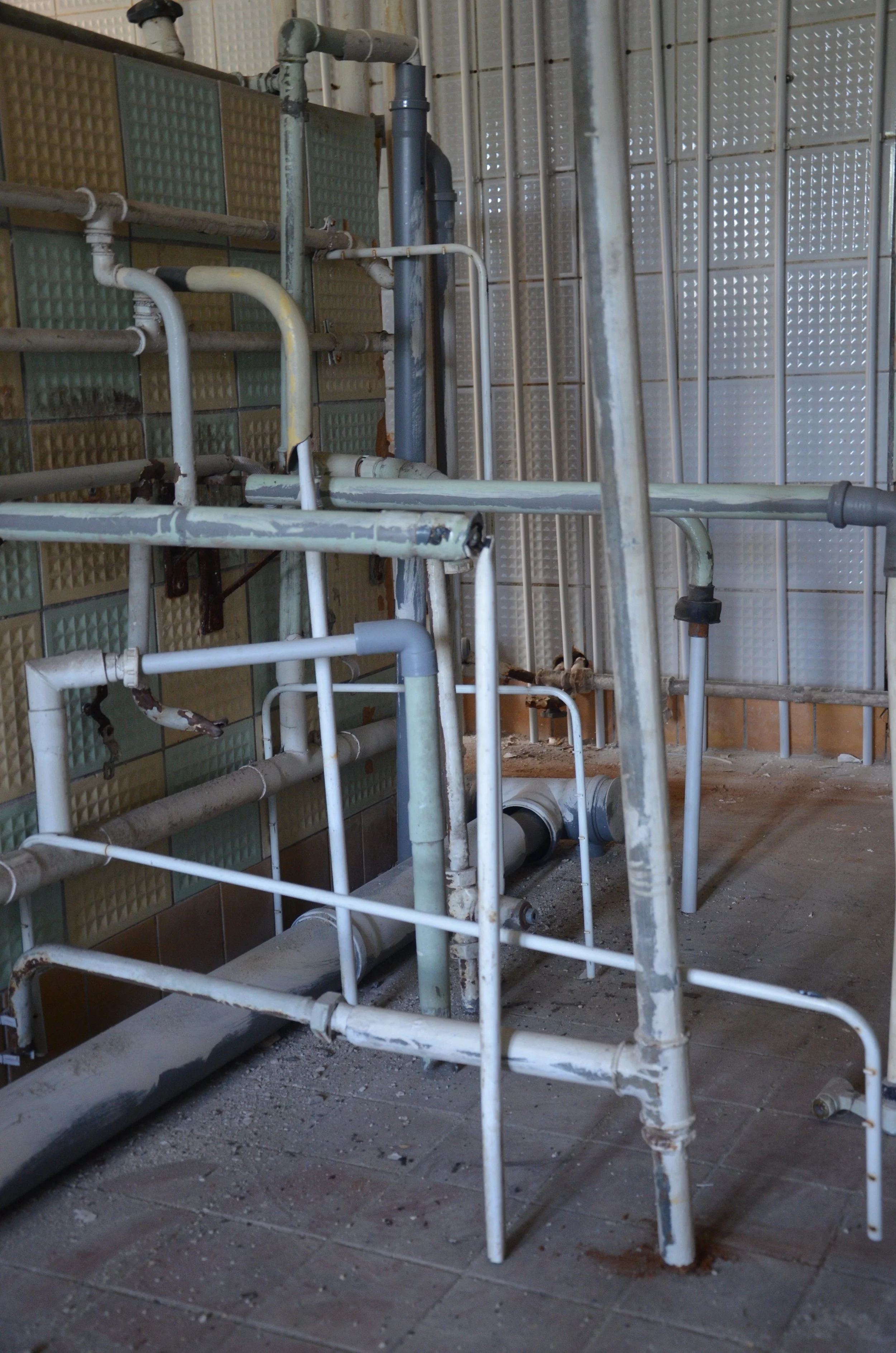
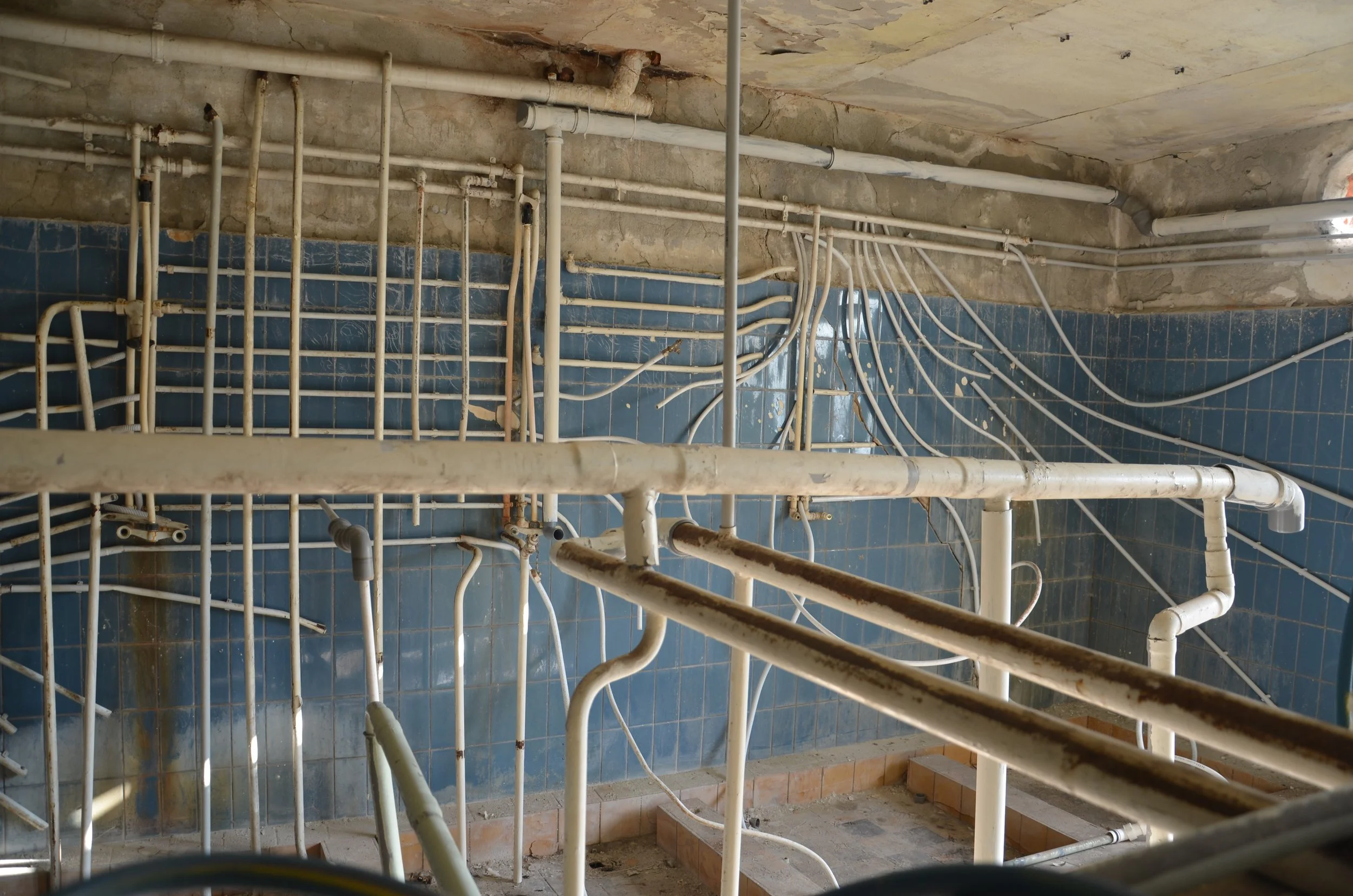
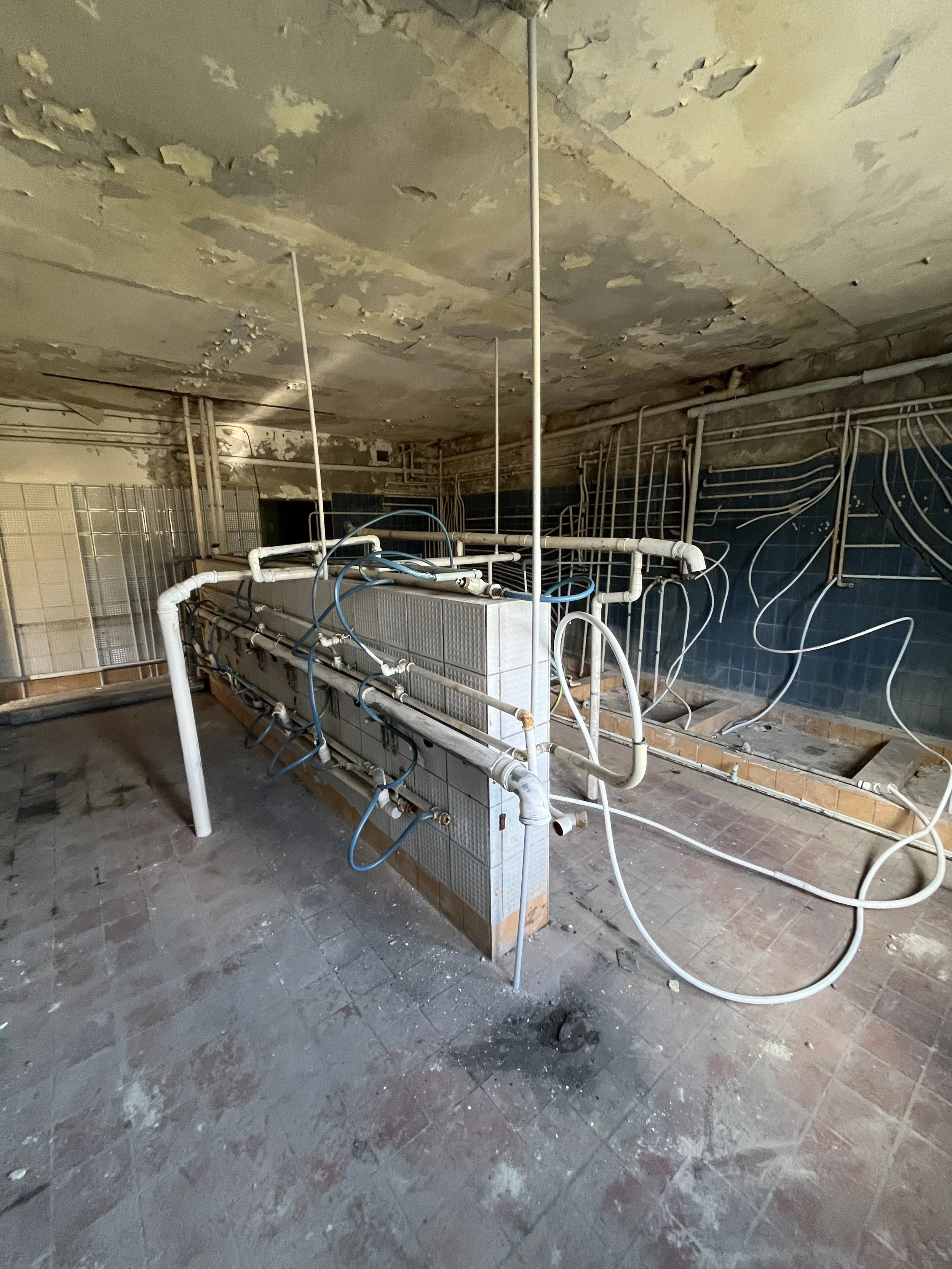
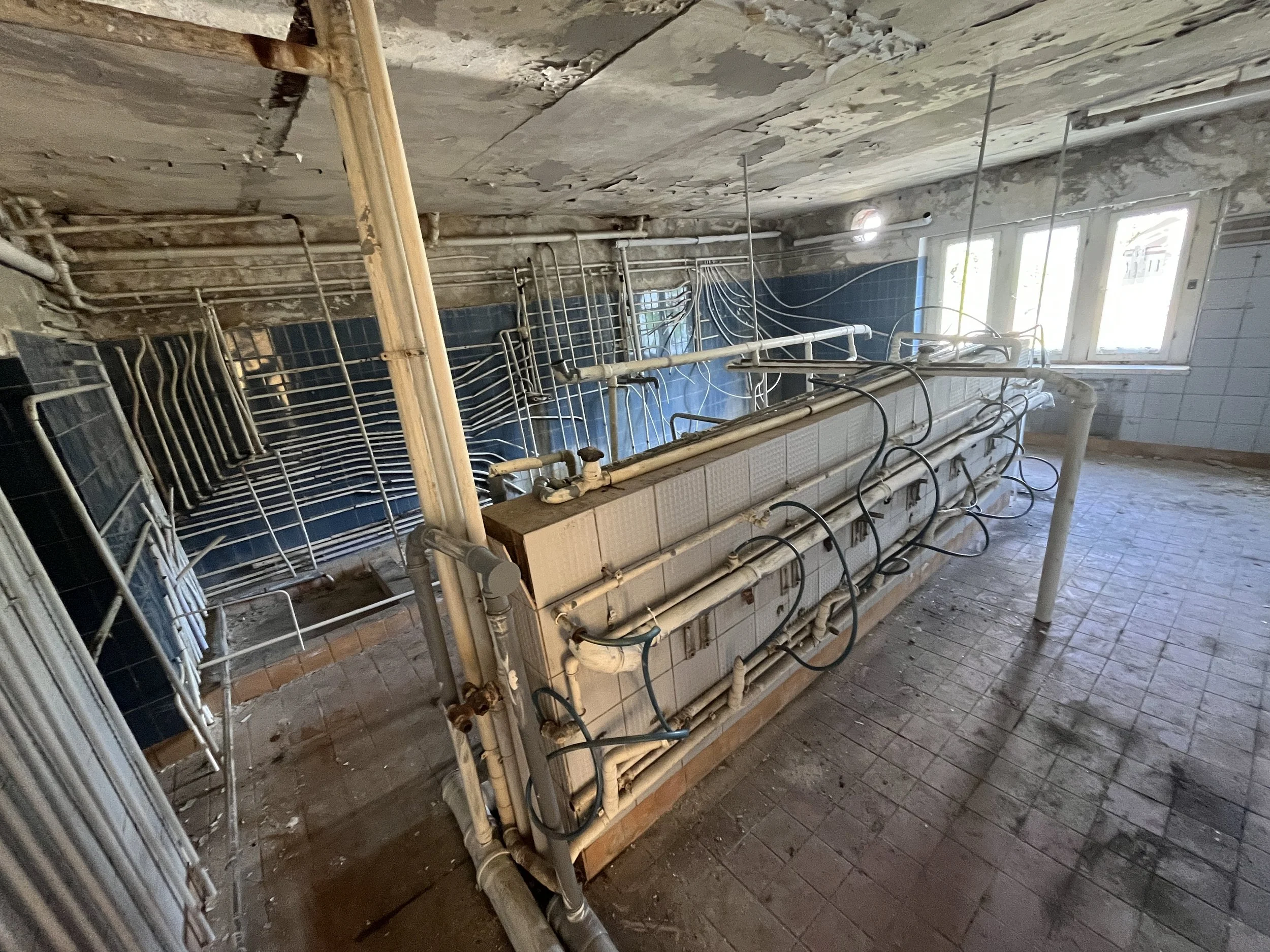
In this installation, Sanne van Balen explores whether linguistic principles can also be applied to a space, such as a bathroom. Theoretically impossible, yet practically challenging. Language can do more than simply describe a space; it can also offer a way to organize relationships within. Take the imperative, for instance: 'open that door.' Such a statement prompts a person to act in relation to their surroundings. Words never exist in isolation; they must adapt to the other words with which they are connected. To construct sentences, we employ elements such as verbs, objects, and subjects. A verb changes its form when the person or tense within a sentence changes (conjugation: i walk, he walks, etc.). In this way, language adapts to the figurative space, the surrounding words. 'Sich flektieren' seeks to make the literal visible: can an actual physical space adapt itself to language? Can you conjugate a space the way you conjugate a verb?
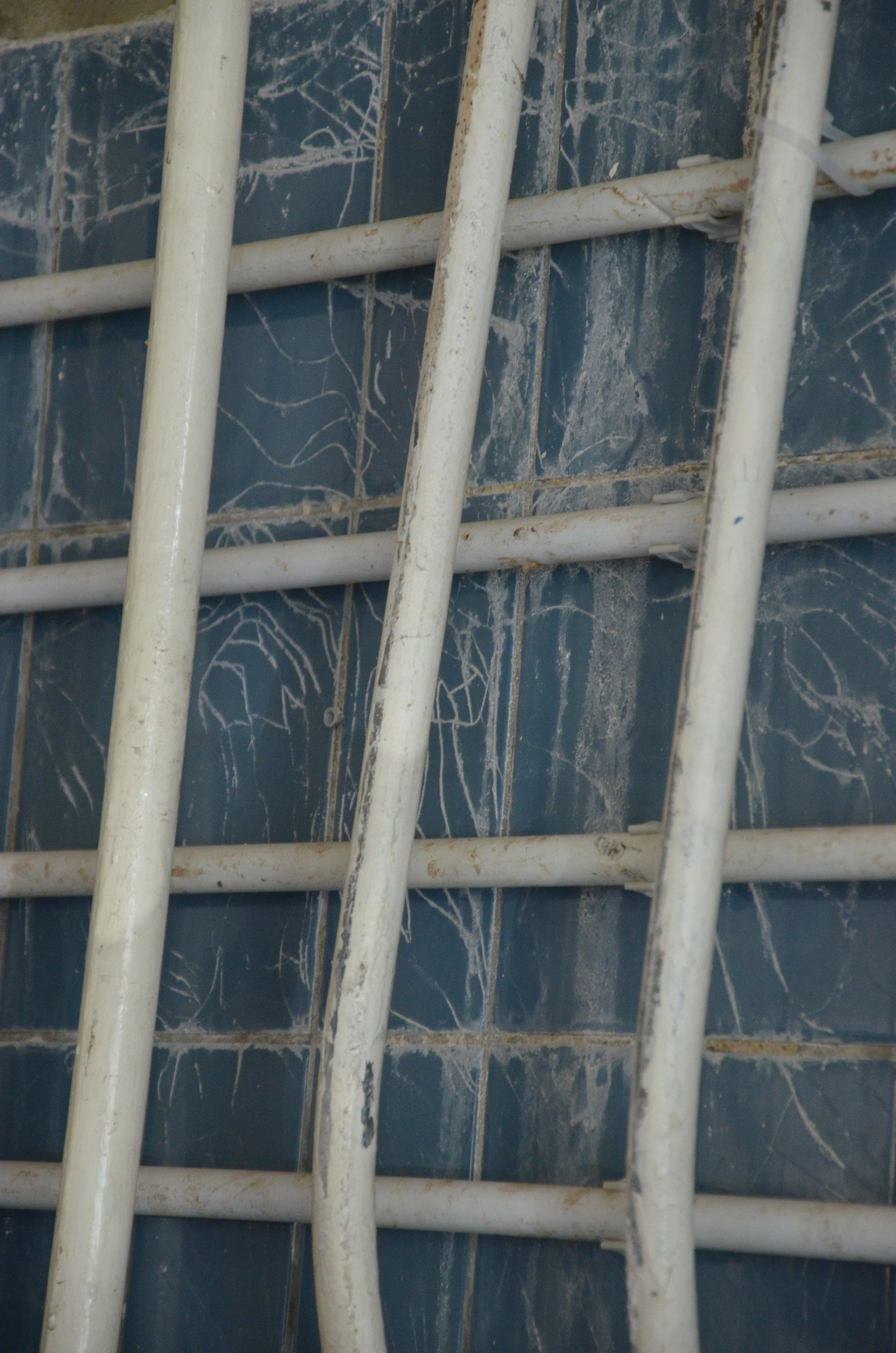
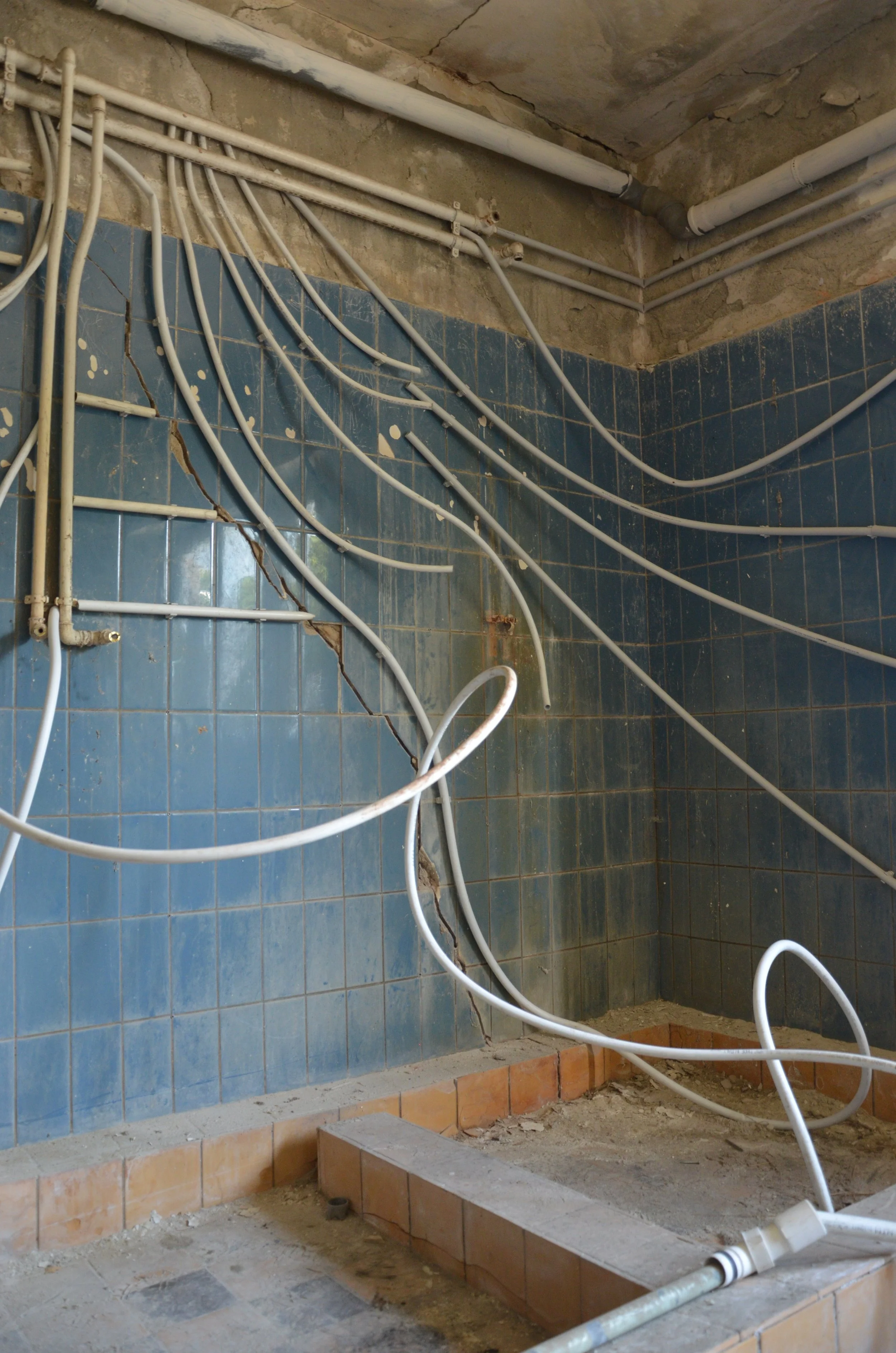
There is a crack in the tiled wall, for example; perhaps that is the point where the space itself finds its voice? The installation has been built up around that crack. Through audio vibrating through the pipes, the language of the space is activated, as if this bathroom, this building, had always possessed a voice that simply needed amplification. For 'Sich Flektieren' verb-like conjugations are applied to nouns representing the space itself, words like ‘Mauer’ (wall), ‘Wände’ (partition wall), ‘Fliese’ (tile), or 'Stein' (stone), treating them as if they were verbs: 'Ich maurere', 'ich wände', 'ich verflies', 'ich steine'. The overarching term for this process is 'flexion', which encompasses both 'conjugation' (for verbs) and 'declension' (for nouns and adjectives). Conjugation involves modifying verbs to align with tense, mood, or person. Inflection applies to nouns, adjectives, and adverbs, adapting them to match other words in terms of gender, number, or case.
In German, the verb 'konjugieren' (to conjugate) shares a root with 'beugen' (to bend); this creates an ambiguity where the act of conjugating a verb blurs into the physical act of bending pipes into the space. Repetitions of reflexive verbs, verbs that 'bend' the space, are incorporated into the soundscape. The choice for reflexive verbs is deliberate. A contemporary linguistic trend sees reflexive verbs shedding the word 'sich' (itself/themselves). In linguistics, ‘sich’ is a 'dummy' word, a filler devoid of intrinsic meaning; it exists solely for the sake of form. The need for something purely for the sake of form is nothing new in the visual arts. While reflexivity might be viewed as a superfluous linguistic element, it is crucial to this installation because the actor, in this case, 'the space', uses it to activate itself. It is not merely through bending, but through 'bending itself', that the object becomes a subject. The one who bends becomes the one being bent. At the same time, a multitude of pipes have bent themselves towards the space’s walls, floors, and ceiling. In this way, the installation reveals the relationship between language, space and pipes as a play on words: conjugation becomes bending, and bending becomes bending itself. The installation thus makes the linguistic structure of the space visible, a space that both bends and conjugates itself, much like a verb.
Read more about IPIHAN the project:
https://ifparadiseishalfasnice.com/edition/16-summer-2026